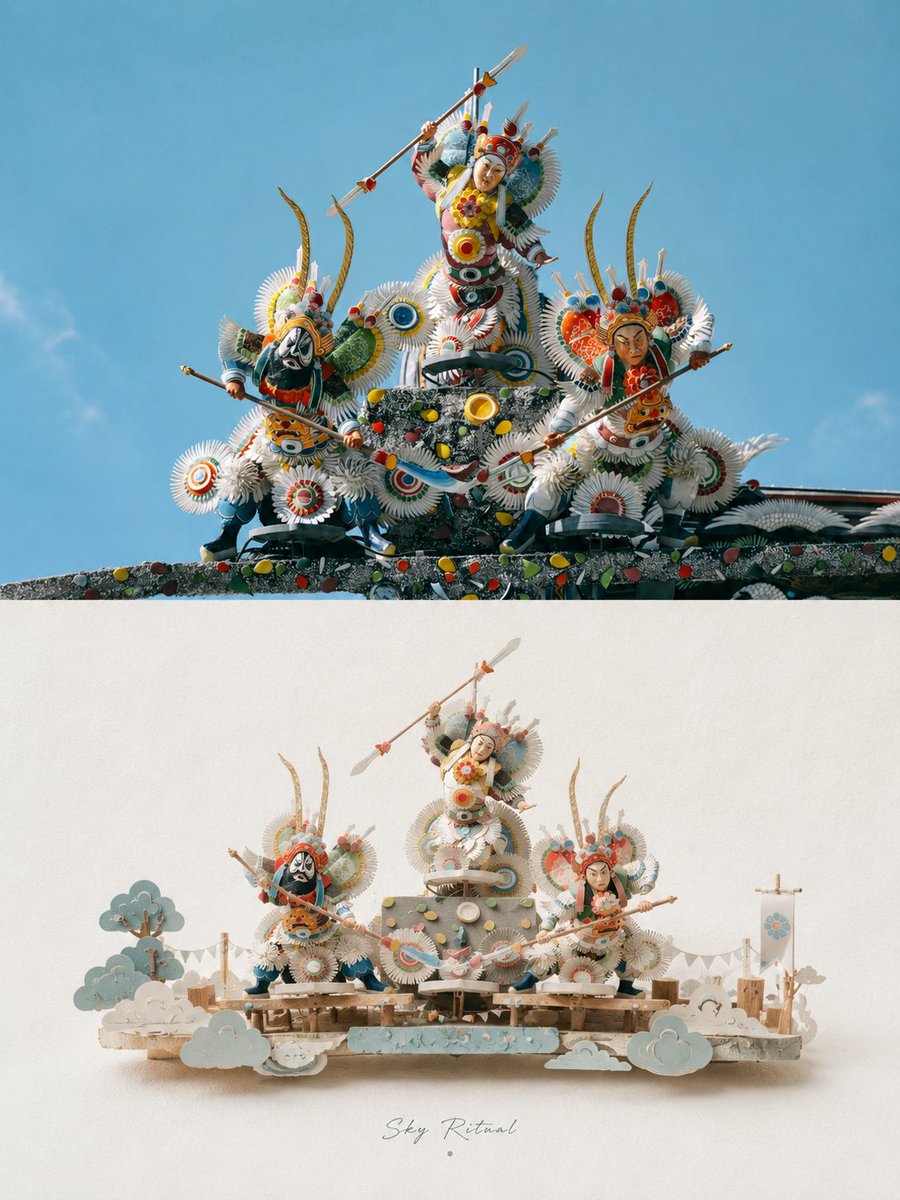
Social Media Post - 3D Papercraft Miniature Poster Design

A sophisticated prompt for transforming uploaded photos into high-end vertical posters, featuring a realistic top half and a stylized 3D paper-craft miniature scene on the bottom half.

Prompt

5,377 charactersOpen Astorie studio ↗
Please transform each photo I upload into a separate, standalone premium-designed poster. Do not create multi-image collages or combine multiple photos into one composition. Each photo must be output individually. Use an overall 3:4 vertical format, divided into two sections with a strict 1:1 height ratio, with the upper and lower sections each occupying exactly 50% of the canvas. The upper half should retain the original photograph. Preserve the subject’s structure, realistic texture, natural lighting and shadows, and the original color atmosphere. Apply only subtle, sophisticated photographic color grading to give the image the refined visual quality of an art magazine, independent publication, or exhibition photography. To adapt the photograph to the required aspect ratio, you may naturally extend the sky, ground, or surrounding environment, but do not stretch, distort, reshape, or alter the main subject. In the lower half, extract the most recognizable subject, silhouette, pose, and narrative relationship from the photograph, and reinterpret them as a refined miniature 3D paper-craft diorama. Do not mechanically reproduce the photograph. Instead, transform the main subject and a limited number of elements that best reinforce its identity and environmental character into miniature handcrafted models made from materials such as paper, cardstock, soft clay, thin wood pieces, or similar tactile craft materials. Arrange them naturally on a narrow, lightweight, floating landscape base. The main subject must remain instantly recognizable at a glance. All other elements should function only as narrative support. Depending on the original photograph, you may incorporate plants, roads, water, lamps, vehicles, people, birds, clouds, or other representative details of everyday life, but every added element must be genuinely relevant to the original theme. Avoid decorative clutter or meaningless accumulation of objects. Base the composition on one core subject + one horizontal miniature landscape strip + generous negative space. Adjust vertical levels, foreground/background relationships, visual density, and left-right balance according to the subject’s scale, direction, and spatial relationships, so that the scene feels like a carefully curated miniature art installation. Create depth through variations in scale, layered overlaps, and small foreground and background elements. The primary subject should carry the greatest visual weight, while supporting models remain smaller and visually quieter. Keep the overall composition centered without making it excessively symmetrical, maintaining a light, refined, calm, and elegant visual rhythm. Continue using a soft, airy, slightly desaturated premium color palette. Establish the main atmosphere with pale powder blue, mist blue, sky blue, and cool airy blues. Balance these with ivory white, creamy white, light beige, soft gray-green, sage green, and neutral architectural tones. Use only small accents of dusty rose or muted blush for subtle detail. The colors should feel soft yet clean. Avoid muddy gray tones, excessive yellow casts, or candy-like colors. Allow different paper layers to create natural spatial separation through subtle variations in tone and color. Emphasize the authenticity of handcrafted materials. Make paper fibers, folded edges, cut edges, layered thickness, slight fraying, and tiny handmade imperfections visible. Use soft natural diffused lighting and delicate shadows to reveal the real volume, depth, and layering of the miniature models, with the intimate tactile quality of macro photography. Keep the background soft white or an extremely pale paper tone, with extensive clean negative space, so that the entire lower half feels like a meticulously photographed premium handcrafted travel postcard. Typography should also be integrated into the visual language of the miniature paper-craft world. Derive a short English title from the location, identity of the subject, theme, or emotional atmosphere of the photograph. The title does not have to be a city name. Use a small, refined typeface with a subtle handwritten character. Preferably place the title within the negative space below the miniature landscape strip. Depending on the relationship with the subject, the text may also follow a slight curve, align gently along the base, or interact spatially with the miniature scene. Keep the typography minimal, elegant, and restrained. Do not add long descriptive copy. The text should feel more like an artist’s signature than a commercial headline. The overall visual direction should combine the premium qualities of miniature diorama, handcrafted paper art, whimsical 3D illustration, and a premium travel postcard. The result should feel light, gentle, refined, tactile, and full of lived-in character, while maintaining strong design discipline and abundant breathing room. Whether the original photograph features a person, animal, plant, architecture, object, vehicle, or natural landscape, maintain a clear yet clever visual correspondence between the real photographic world in the upper half and the miniature handcrafted world in the lower half. Avoid plastic-looking 3D rendering, toy-like aesthetics, childish craft styles, overly complicated compositions, excessive cuteness, visual clutter, or an e-commerce product-display appearance.

From sourceView source ↗

More to explore

Product Marketing - 3D Designer Toy Girl Portrait

Product Marketing - 3D Designer Toy Girl Portrait

mo KiGPT Image 2
Square 1:1 close-up portrait of a collectible 3D designer-toy girl, high-end Pop Mart / C4D Octane look. Soft East Asian teen features, round cheeks, light freckles across nose, glossy peach lips, large hazel eyes with long lashes. Soft wavy chestnut hair to collarbones with a loose side part and two tiny mint hair clips. She rests her chin lightly on the back of one hand. Cream translucent oval sunglasses with soft mint-tinted lenses. Mint ribbed tank under an oversized off-white zip hoodie slipped off one shoulder. Matching mint spherical earrings. Solid mint-seafoam background. Bright commercial key light, soft catchlights, subtle subsurface scattering, ultra-detailed hair strands and knit texture. No logos, no watermark, no text, not a photo of a real person.
Social Media Post - Six Magazine Covers

Social Media Post - Six Magazine Covers

オオトリヒカリ🐦‍🔥GPT Image 2
Generate a high-resolution horizontal image featuring six distinct magazine covers lined up side-by-side on a clean white background. The central subject is the same anime-style young woman with shoulder-length brown hair and blue eyes, but she is dressed and styled differently for each genre. 

From left to right, the covers are:
1. Women's Fashion: Title '凛と日和'. She wears a coral top and white pants, holding a bag.
2. Anime/Game: Title 'アニマギア'. She wears a futuristic neon-purple idol outfit with glowing accents.
3. Business: Title '週刊ビジネス羅針盤'. She wears a professional dark grey suit and holds a tablet.
4. Travel: Title '旅色めぐり'. She wears a casual orange jacket and stands against a mountain landscape.
5. Cooking: Title 'おいしい毎日'. She wears an apron over a yellow shirt, standing in a kitchen with fresh ingredients.
6. Occult: Title '異界探訪'. She wears a dark red Victorian-style dress in a mysterious, shadowy setting.

Each cover must include authentic Japanese typography, headlines, and small text blocks typical of real magazines.
Social Media Post - Retro Portrait of Woman in Floral Pajamas

Social Media Post - Retro Portrait of Woman in Floral Pajamas

いがぐりメタボGPT Image 2
A vertical portrait photograph of a young woman with short, messy dark hair lying on her back in bed. She is wearing a vintage-style two-piece pajama set consisting of a button-down shirt and shorts, both featuring a delicate floral pattern on a cream background. Her right arm is raised above her head, resting on the pillow, while her left hand gently touches the side of her head. Her expression is soft and slightly melancholic, looking directly at the camera with parted lips. The setting is a cozy bedroom with a wooden headboard visible behind her. To the left, there is a bedside table cluttered with books, a small round analog clock, and other personal items. Sunlight streams in from a window on the right, illuminating her face and torso with warm, natural light. The image has a distinct retro aesthetic, characterized by film grain, soft focus, and warm color tones reminiscent of Showa-era photography.
Social Media Post - Retro Showa Girl Holding Vintage Camera

Social Media Post - Retro Showa Girl Holding Vintage Camera

いがぐりメタボGPT Image 2
A vertical, medium-shot photograph capturing a candid moment of a young East Asian woman in a retro Showa-era style. She has shoulder-length black hair with straight bangs and is wearing a beige button-down shirt with sleeves rolled up to the elbows, paired with blue denim jeans. Her expression is lively and surprised, with her mouth open as if speaking or laughing, and she holds a vintage black folding bellows camera (medium format) in her right hand near her chest. Her left arm extends directly toward the lens, creating a strong foreshadowing effect where her hand appears large and out of focus in the foreground, reaching towards the viewer. The background features a weathered wooden building with dark siding and tiled roof eaves under a clear blue sky. The image has a distinct film grain texture, warm color tones, and soft lighting typical of analog photography from the 1970s or 80s.
Profile / Avatar - GPT Image 2 Colored Pencil Illustration

Profile / Avatar - GPT Image 2 Colored Pencil Illustration

SairahGPT Image 2
Transform the uploaded photograph into a beautiful, hand-drawn colored-pencil illustration while preserving the original photograph's exact content, composition, and emotional atmosphere.

1. REFERENCE IMAGE ACCURACY
Carefully analyze the uploaded photograph, including the subject's identity, facial features, hairstyle, expression, pose, clothing, accessories, body proportions, surrounding objects, background, camera angle, perspective, lighting, and small distinctive details.

Recreate the same scene as an illustrated drawing. Preserve the recognizable appearance of the original subject and the exact arrangement of the scene. Do not change the pose, invent new objects, remove important details, or alter the original environment.

2. ART STYLE
Use a traditional colored-pencil and wax-crayon illustration style, resembling a beautiful drawing made by hand on textured cream-colored sketchbook paper.

Include:
- Visible colored-pencil strokes and delicate crosshatching.
- Soft, imperfect hand-drawn outlines.
- Layered pencil shading with natural variations in pressure.
- Fine paper grain and subtle crayon texture.
- Warm, muted colors with gentle pastel undertones.
- Slightly sketchy contours and charming handmade imperfections.
- Natural color blending without smooth digital gradients.
- Detailed hair rendered with individual flowing pencil strokes.
- Expressive facial details with simplified yet recognizable features.
- Soft shadows created through layered pencil strokes rather than photographic shading.

3. COLOR PALETTE
Use a warm, nostalgic palette featuring creamy beige, dusty pink, muted brown, warm caramel, charcoal black, soft gray, and subtle earthy colors. Match the original photograph's actual colors while translating them into a traditional illustration medium.

4. BACKGROUND AND ENVIRONMENT
Recreate the original background faithfully, including furniture, doors, walls, streets, sidewalks, railings, plants, pets, buildings, and other visible elements.

Render background details with loose but intentional pencil strokes. Maintain the original depth, perspective, and spatial relationships while giving the entire scene a cohesive, hand-illustrated appearance.

5. LIGHTING AND MOOD
Preserve the original lighting direction and overall atmosphere. Create a cozy, intimate, nostalgic feeling, as if the moment were captured in a personal illustrated diary or a page from an artist's sketchbook.

6. FINAL FINISH
The entire image must look genuinely hand-drawn using colored pencils on textured paper, NOT like a photograph with an artistic filter.

Maintain the original aspect ratio and composition. Use fine illustrative details, organic linework, visible pencil grain, gentle imperfections, and consistent hand-drawn textures throughout the image.

IMPORTANT: The uploaded photograph is the sole reference for the scene. Preserve its identity, pose, objects, and composition. Transform only the visual medium into a traditional illustration.
Infographic / Edu Visual - Personalized Palmistry Guide Infographic

Infographic / Edu Visual - Personalized Palmistry Guide Infographic

露西的百宝箱GPT Image 2
Goal: Create a vertical infographic-style palmistry guide titled {argument name="title text" default="你的个人指南"}.
Canvas: A clean, modern layout with a white background and black text, divided into three main columns. The style is minimalist and educational, resembling a high-end wellness or self-improvement app interface.
Layout:
- Left Column: Top section has the title "你的个人指南" in large bold characters, followed by the subtitle "认识自己 · 专注成长 · 持续进化". Below this is a realistic photo of an open right hand (palm facing forward). Further down are sections for "你的手" (Your Hand) listing details like dominant hand, element, shape, and finger traits; "快速总结" (Quick Summary); "优势" (Strengths) as a bulleted list; and "关键关注点" (Key Focus Points) as another bulleted list.
- Center Column: Top section shows a detailed black-and-white fingerprint scan image labeled "掌印图" (Palm Print Image). Below that is a line-drawing diagram of a hand labeled "主要掌纹图" (Main Palm Lines Diagram), with numbered lines (1-5) corresponding to specific palm lines. Underneath is a bar chart section "手型类型" (Hand Type) showing percentages for Fire, Wind, Earth, and Water elements. At the bottom is a legend for "掌丘" (Mounts) explaining their meanings.
- Right Column: Contains five distinct cards detailing specific palm lines: 1. 感情线 (Heart Line), 2. 智慧线 (Head Line), 3. 生命线 (Life Line), 4. 命运线 (Fate Line), and 5. 太阳线 (Sun Line). Each card includes a description and interpretation. Below these is a final advice box "最终建议" and a notes section "备注".
Visual Style: Use thin black borders for cards. Icons should be simple line art (e.g., heart, brain, shield). Text should be crisp sans-serif Chinese characters. The fingerprint image should have high contrast with visible ridges.
Text Content: Ensure all Chinese labels match the provided image exactly, including headings like "手相解读", "掌印图", and the specific interpretations for each line.

Find your next direction

ASTORIE CANVAS

Take the idea further.

Bring your prompts, references and results together in one creative space.

Open your canvas ↗