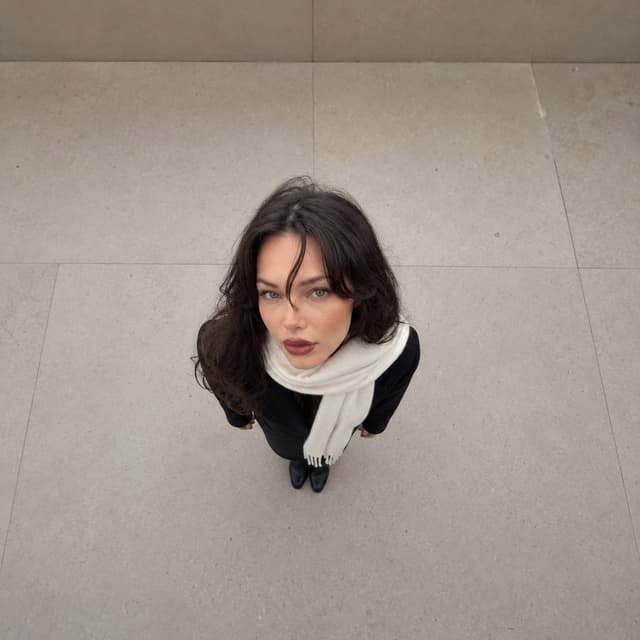
Comic / Storyboard - Split Photo and Storybook Illustration
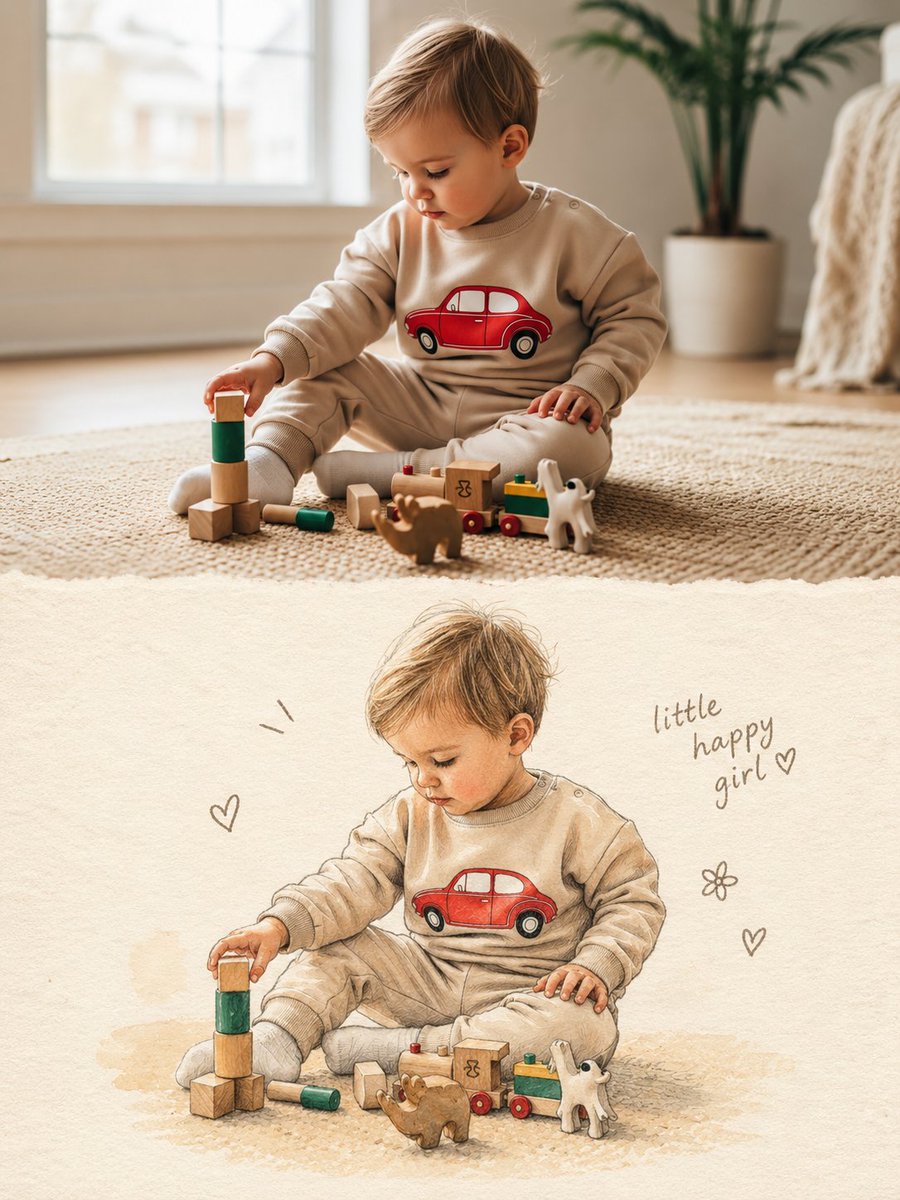
A complex transformation prompt that creates a vertical split composition, pairing a real photograph in the top half with a delicate, handmade children's storybook illustration of the same moment in the bottom half.
Create one vertical 3:4 composition that combines the uploaded photo with a hand-drawn illustrated version of the same moment. TOP HALF — ORIGINAL PHOTO. Keep the uploaded photograph in the upper portion of the canvas, occupying roughly 50%. Treat the photo as the only source of truth. Keep the person, face, expression, hair, outfit, accessories, pose, proportions, objects, lighting, colors, and surroundings faithful to the original. Do not beautify, retouch, restyle, replace, or reinterpret the photograph. It should remain natural and recognizable, as if the original image has simply been placed into the artwork. BOTTOM HALF — ILLUSTRATED VERSION. Use the lower portion to recreate the exact same moment as a handmade children's picture-book illustration. The illustrated version should retain: the same person and recognizable facial features, identical pose and body positioning, matching hairstyle and clothing, matching accessories and visible details, the same action and overall mood. Use a soft traditional art approach with: delicate watercolor washes, colored-pencil texture, fine pencil or ink contours, warm textured ivory paper, gentle hand-rendered shading, slightly uneven, organic strokes, subtle imperfections that make it feel handmade. Avoid a polished digital look. No photorealism, 3D rendering, anime aesthetics, or exaggerated cartoon styling. Simplify the background instead of copying every environmental detail. Keep only enough of it to suggest the original setting, while giving the illustrated subject plenty of breathing room. Make the illustrated subject slightly smaller than the photographic subject and leave generous negative space around it. SMALL HAND-DRAWN ACCENTS. Add only a handful of understated doodles around the illustration — perhaps tiny hearts, stars, flowers, or simple motion marks. They should feel naturally drawn onto the page rather than digitally decorated. Include a small handwritten note near the illustration: “{argument name="caption" default="little happy girl"} ♡”. Use a casual brown or soft-gray pencil/ink appearance. If the subject is not a girl, replace the wording with something suitable or leave the caption out. FINAL FEEL. The finished piece should resemble a beautiful handmade scrapbook or children's storybook page, where a real photograph has been paired with a lovingly drawn memory of the same scene. Keep the presentation: vertical 3:4, warm and editorial, cleanly divided between photo and illustration, minimal and elegant, sentimental but not overly decorative, rich in tactile paper and traditional drawing texture. IMPORTANT. Use only the uploaded photograph as visual reference. Do not borrow anything from previous prompts, images, references, or generated results. Do not introduce a different person, outfit, pose, object, setting, color scheme, or visual detail. The lower illustration must unmistakably represent the exact scene and moment shown in the uploaded photograph.